Skip to content

Built with Dataplicity

From accessible learning hardware to energy monitors and office automation, these published projects show real ways people have used Dataplicity to reach a Linux device, expose a local service, and keep useful hardware accessible after it leaves the workbench.

Customer and community projects

Every example below links to the maker's own write-up, an organisation's documentation, or a Dataplicity-published video. We describe only the Dataplicity use that those sources document.

Get your project featured →

Connected products in the field

Thinkerbell Labs braille learning device video thumbnail

Accessible learning hardware · Remote monitoring

Thinkerbell Labs braille learning device

Thinkerbell Labs' connected braille learning device is featured in a Dataplicity video about making remote monitoring of IoT devices faster and more efficient.

Watch the Dataplicity video →
OpenEnergyMonitor remote access guide

Energy monitoring · Remote support

OpenEnergyMonitor emonPi and emonBase

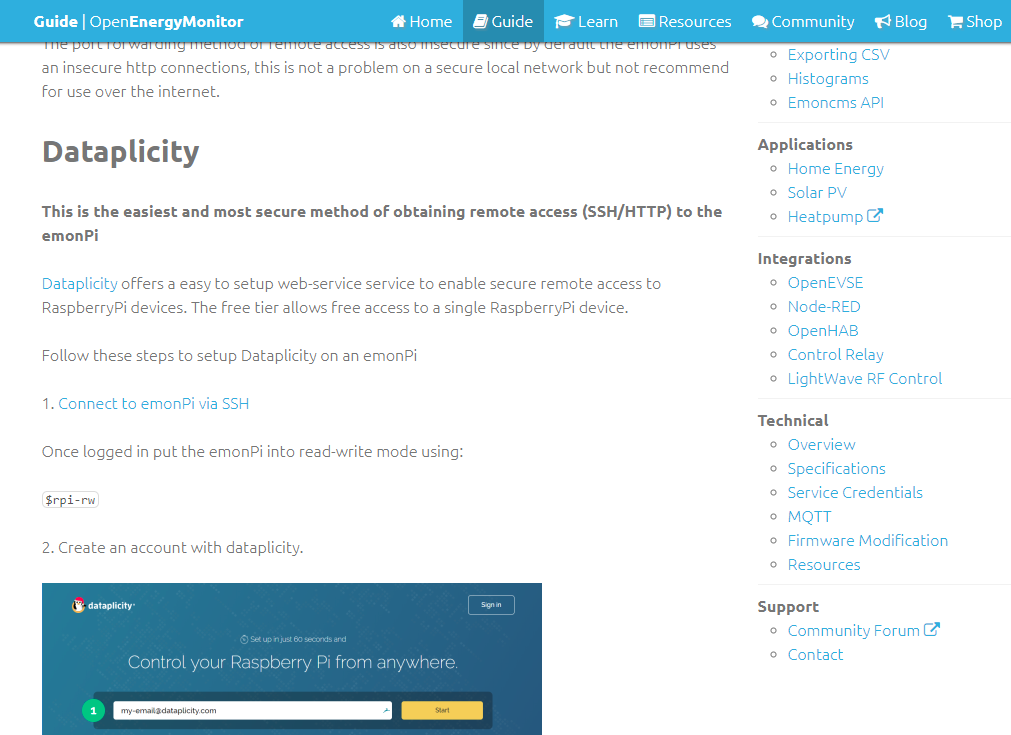
OpenEnergyMonitor documents Dataplicity for remote SSH and HTTP access to emonPi and emonBase, including Wormhole access to the Emoncms interface.

Read the setup guide →
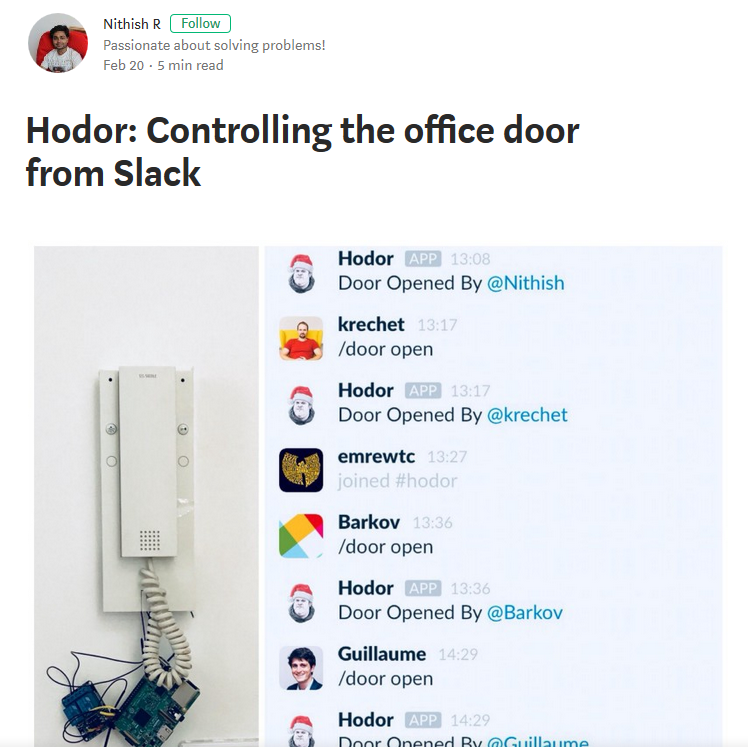
KI labs Hodor office door project

Office automation · Exposed device service

KI labs' Hodor door controller

KI labs connected a Raspberry Pi and relay to an office intercom. A Slack command called a service on the device through Dataplicity Wormhole to open the door.

See how Hodor works →
All About Circuits home telemetry project

Sensors · Remote shell and web access

All About Circuits home telemetry

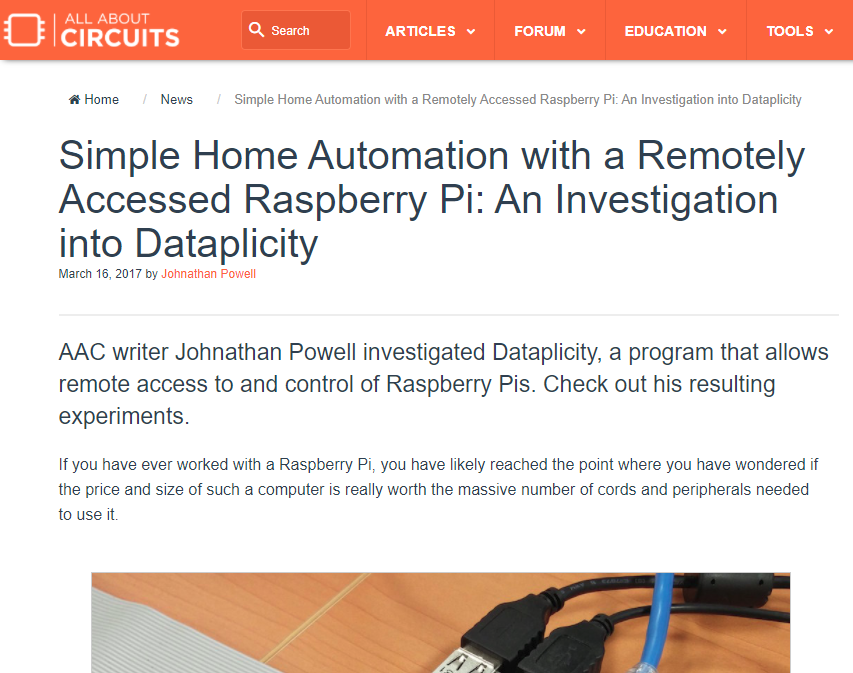
Writer Johnathan Powell used Remote Shell to run temperature and motion-sensor code, then Wormhole to publish a small browser dashboard from the device.

Read the investigation →
Madhan Sundaram voice-controlled light project

Home automation · Secure endpoint

Madhan Sundaram's voice-controlled light

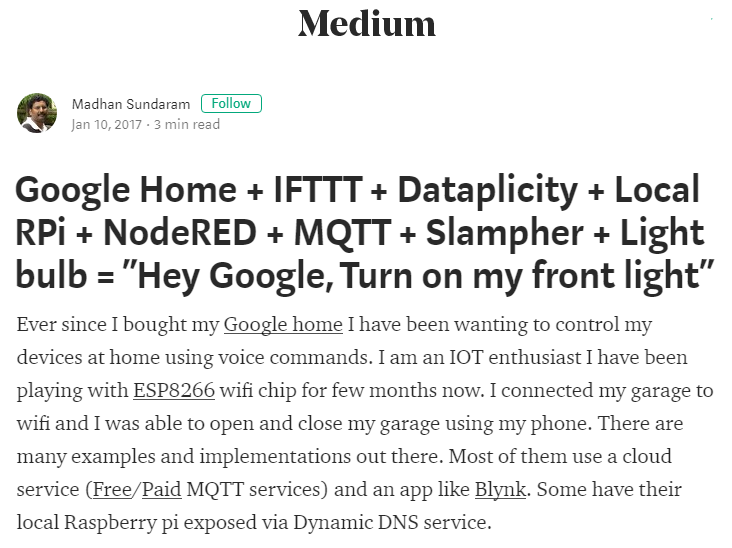
This published build joined Google Home, IFTTT, Node-RED, MQTT, and a local Raspberry Pi. Dataplicity Wormhole provided the HTTPS endpoint into the device.

Follow the project →
Frank Burke-Olson internet-connected door buzzer

Physical computing · Remote action

Frank Burke-Olson's connected door buzzer

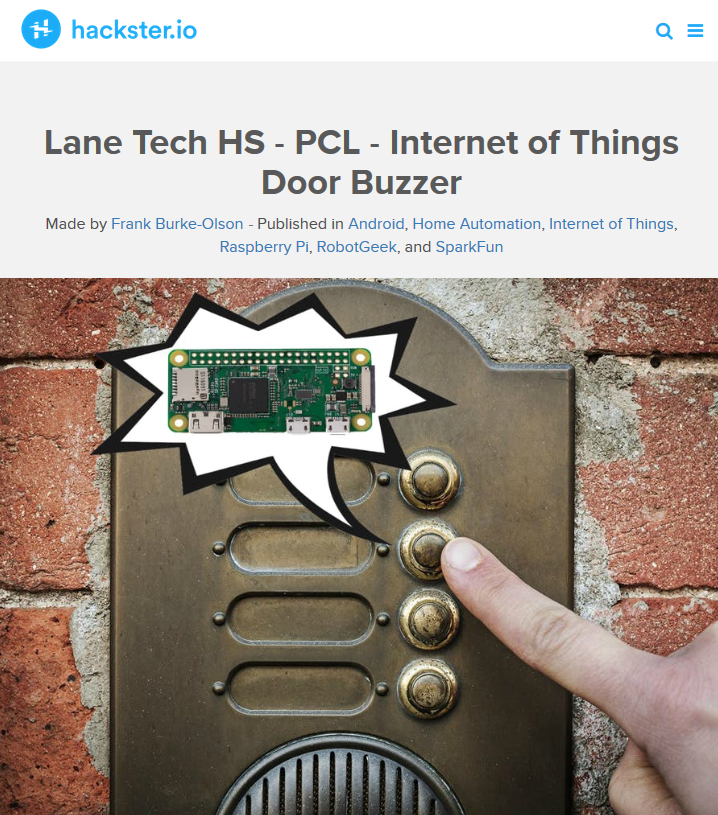
The Lane Tech project used a Raspberry Pi, relay, and Dataplicity Custom Actions to unlock a building door remotely, with a connected camera workflow for visitor pictures.

Explore the Hackster build →

What these projects demonstrate

The hardware and scale vary, but the operational pattern is consistent:

  1. Connect a Linux device without changing the site network. The device establishes the outbound connection.
  2. Reach the software where it runs. Makers use Remote Shell for terminal access or Wormhole for a local HTTP service.
  3. Keep the product useful after deployment. A browser, webhook, or integration can reach the device when nobody is beside it.

Those same foundations support the wider connected-product lifecycle: prepare repeatable deployments, organise devices into fleets, monitor deployed systems, and support customer devices without a VPN.

About the evidence

These projects were published independently. Each linked source describes its use of Dataplicity; check the source for current project instructions. Inclusion records the project example rather than a commercial endorsement.

Share what you built

Have a deployed product, fleet workflow, integration, or inventive one-device build? See what to submit and get your project featured.