

Appearance
Boards and cards #
Create a board, shape columns around real handoffs, and keep each card linked to the devices, events, incidents, or monitors it is about.
Create a board #
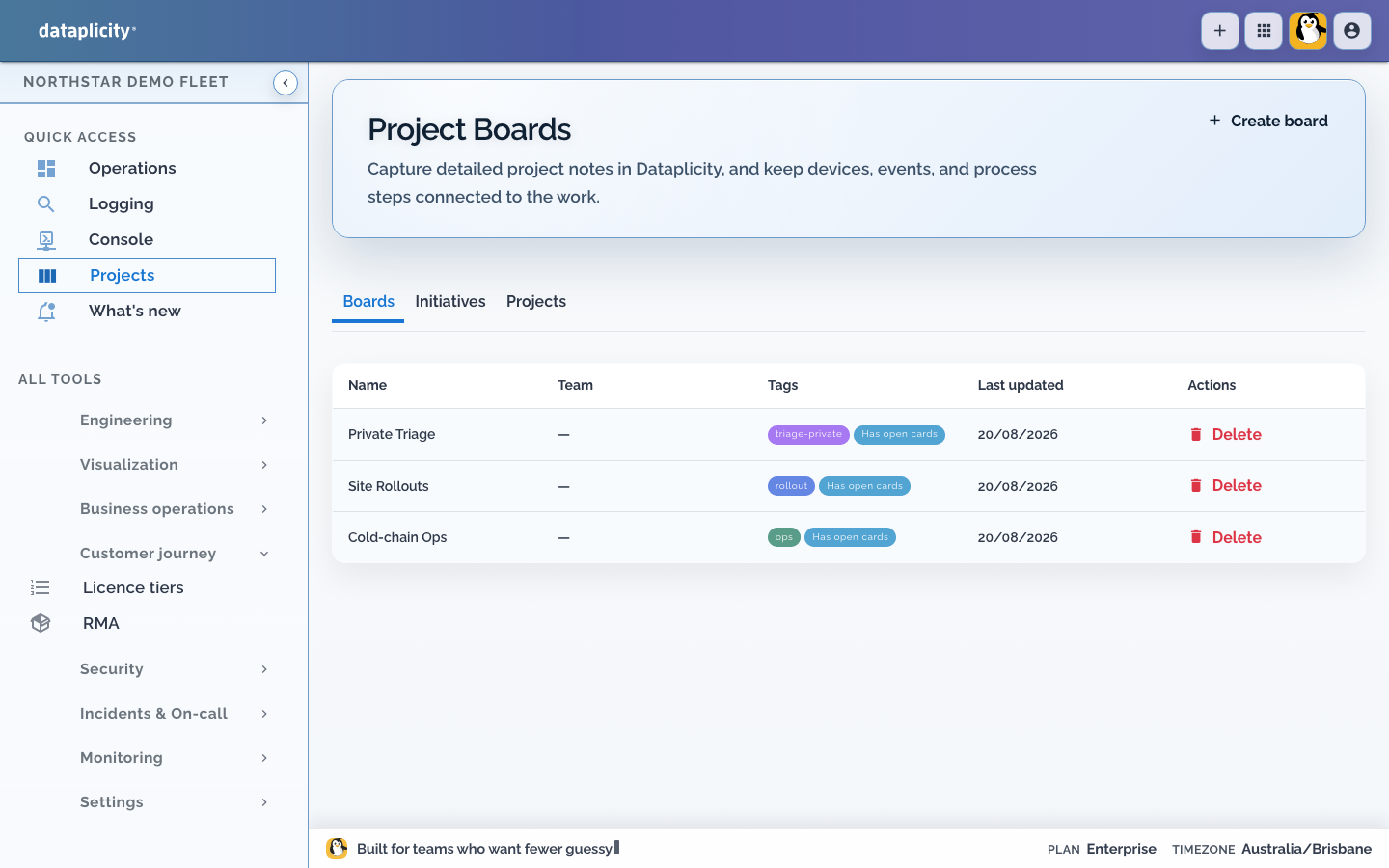
- Open Projects in the main navigation.
- Select the Boards tab.
- Select Create board.
- Enter a clear operational name, such as
Cold-chain Ops. - Select Create.
The new board starts with Todo, Doing, and Done, plus an example card. Rename those columns, remove the example, or add columns to match the handoffs your team actually uses.
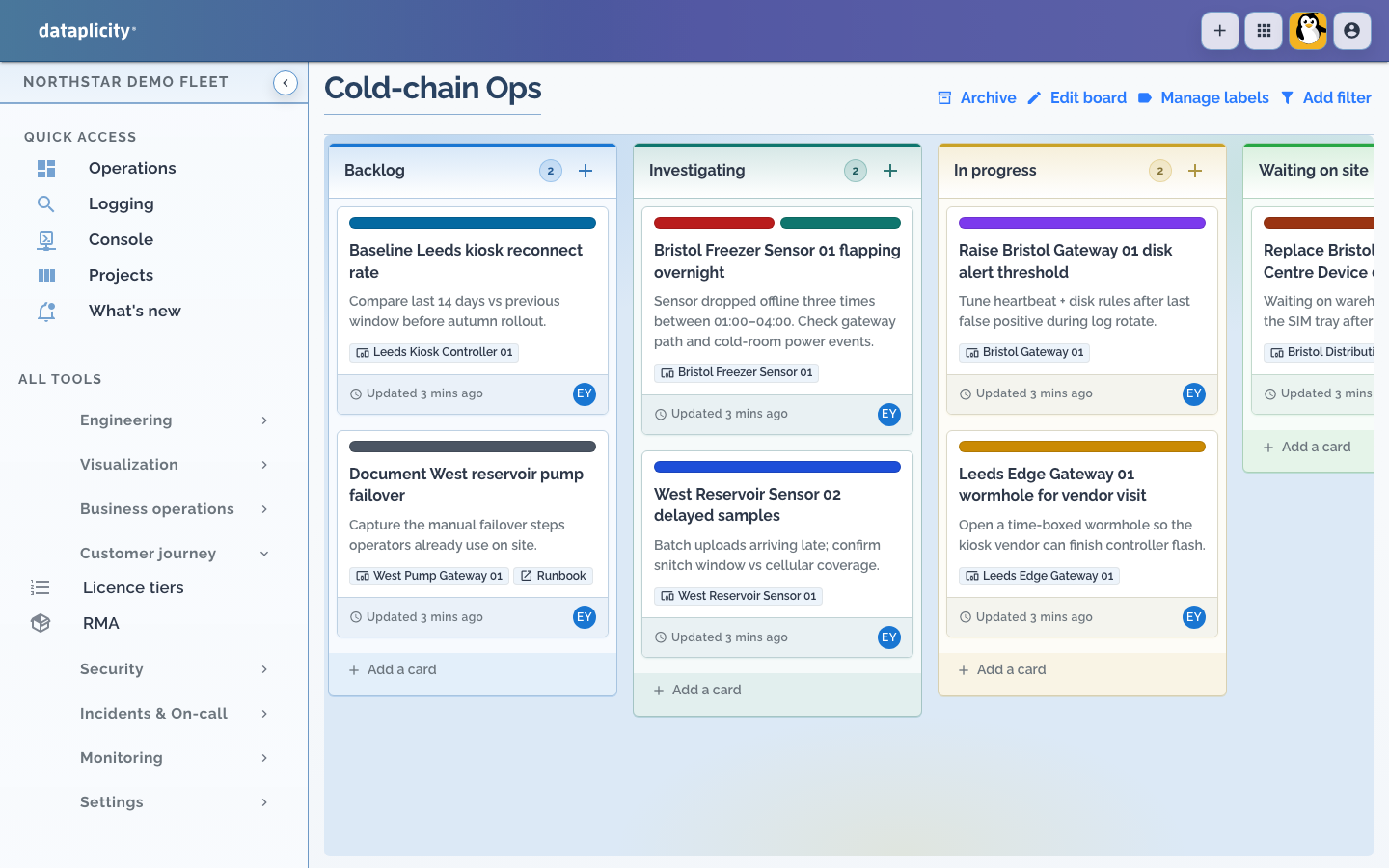
Shape the columns around your workflow #
On the board:
- Select a column name to rename it.
- Select Add another list to add a column.
- Drag columns horizontally to change their order.
- Open Edit board for the full column list, including hidden columns.
Choose columns that represent real changes in ownership or state. For example:
- Support triage: Inbox → Investigating → Waiting for customer → Resolved
- Site rollout: Planned → Ready for site → Installing → Verifying → Done
- Fleet maintenance: Backlog → Scheduled → In progress → Waiting for parts → Done
Create a card #
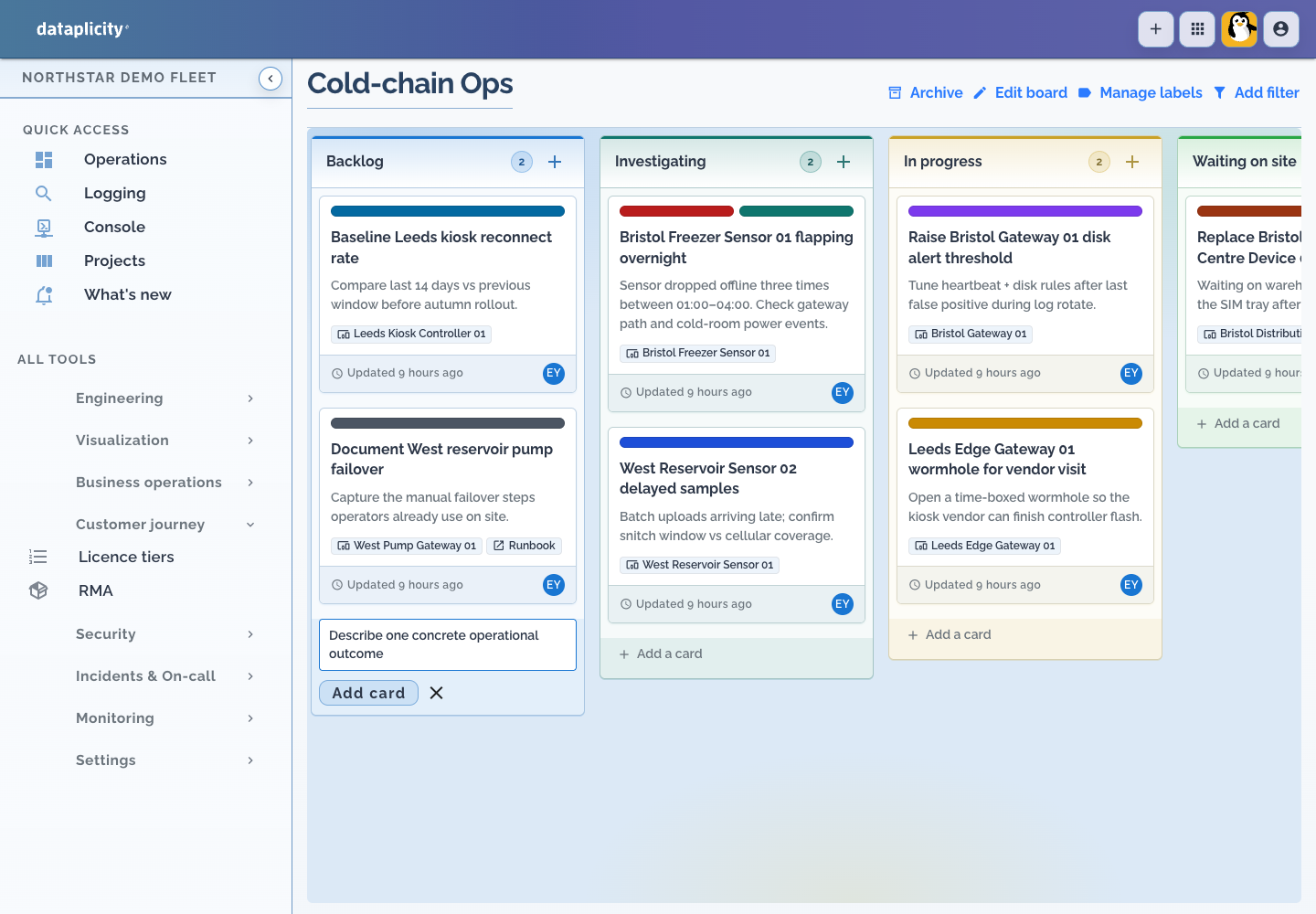
- In the target column, select Add a card.
- Enter a title that identifies the outcome, site, or device.
- Press Enter or select Add.
- Select the card to add its working details.
The inline composer creates a title-only card. Use the card detail panel for the rest of the work.
Good titles are specific enough to scan on the board, such as:
Bristol Freezer Sensor 01 flapping overnightInstall gateway at Leeds loading bayConfirm recovery after loading-bay controller update
Put the working detail on a card #
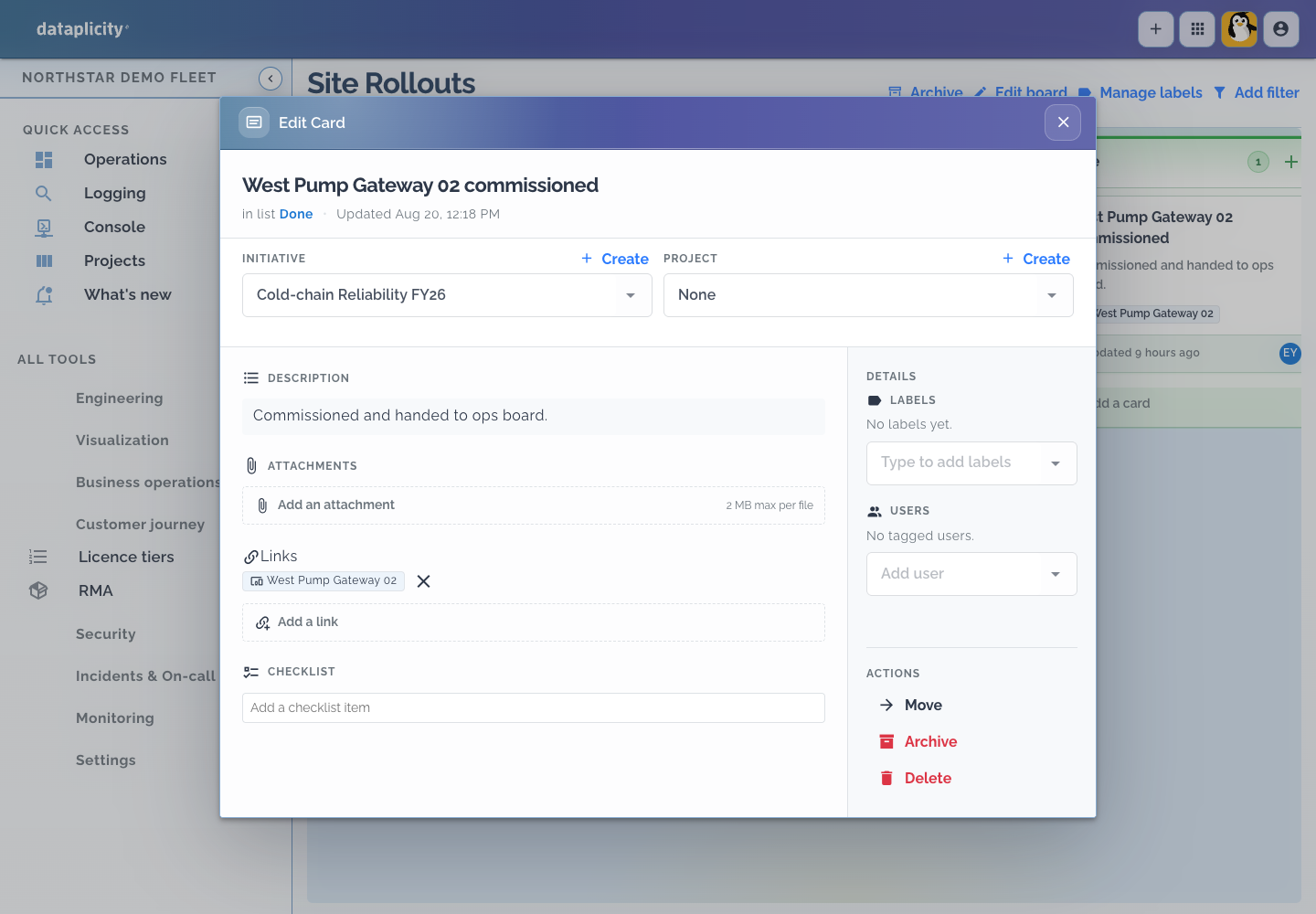
Open a card to add:
- a description with the problem, expected outcome, or handoff notes;
- a checklist for investigation, rollout, or verification steps;
- labels for categories your team wants to scan or filter;
- an assignee, plus tagged users who need to see the work;
- file attachments, up to 2 MB per file;
- a linked Initiative, Project, or Plan;
- Dataplicity references to devices, device classes, events, incidents, and monitors;
- documentation and external URLs.
Card fields save through their own controls. For example, the title saves when editing finishes, while the description has a Save action.
Move work between columns #
Drag a card to another column when its real workflow state changes. You can also reorder cards within a column.
The move saves when you drop the card, without a separate board-level Save action. If the update cannot be saved after retries, Dataplicity shows an error and reloads the board.
Treat column movement as an operational signal. Move a card to Waiting on site only when the next action genuinely belongs to the site team, and move it to Done only after the checklist or acceptance evidence is complete.
Archive and restore completed work #
Archiving removes a card from the active board without deleting its history.
To archive a card:
- Move it into a column whose name contains Done.
- Open the card.
- Open Actions and select Archive.
- Confirm the action.
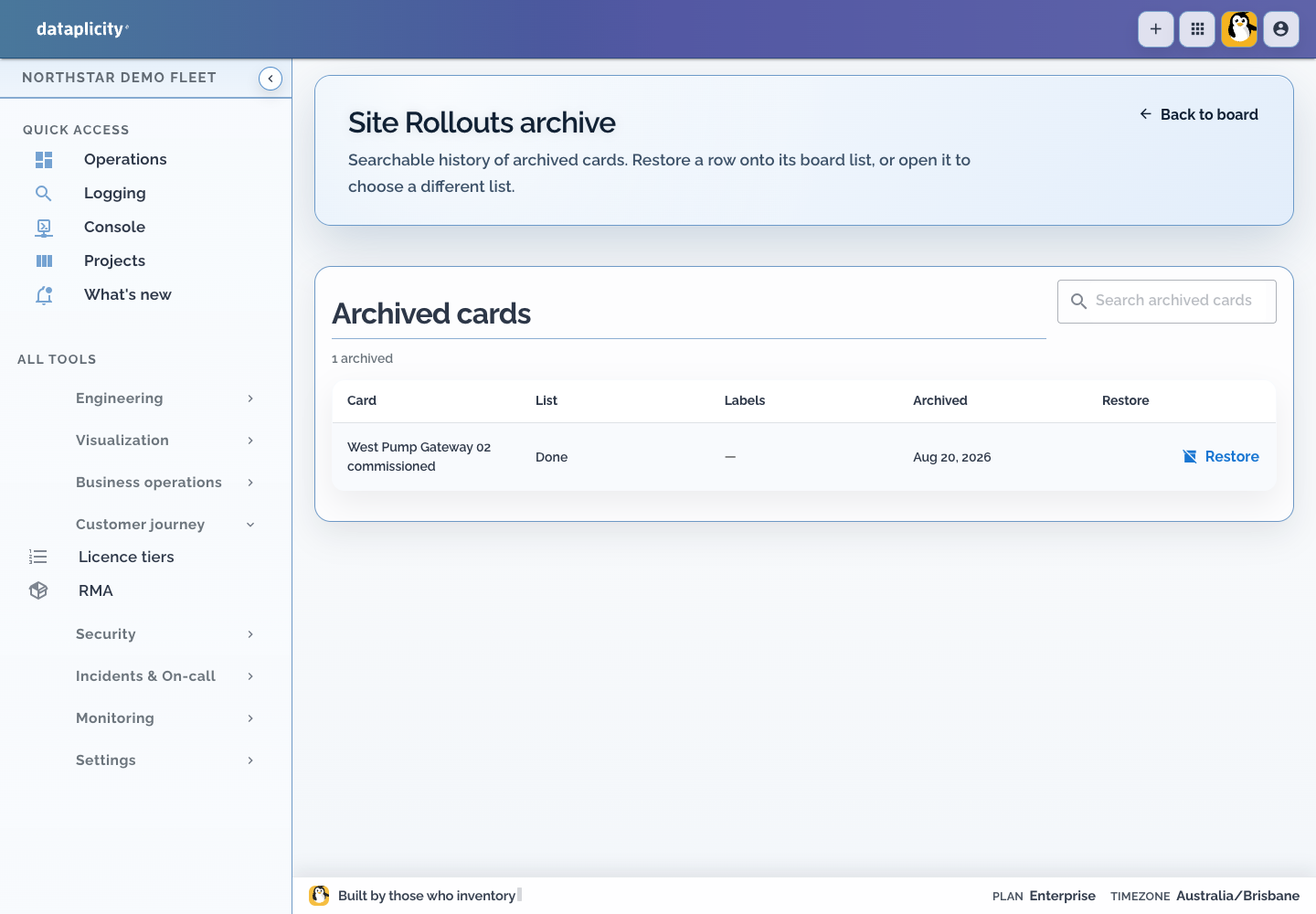
To find or restore archived cards:
- Select Archive in the board header.
- Search or browse the archived-card list.
- Select Restore on a card.
Restoring from the archive list returns the card to its previous column. Deleting a card is different: deletion is permanent.
Board settings include Auto-archive days. When set above zero, Dataplicity archives eligible cards in Done-named columns once a day after they have sat unchanged for that many days. Set the value to 0 to turn automatic archival off. Manual archive and restore still work at any time.
Start a card from a fleet record #
Supported device, incident, and event views include Add to board:
- Open the device, incident, or event.
- Select Add to board.
- Choose a board and column.
- Enter the card title and confirm.
Dataplicity creates the card and attaches the source record as a reference.
Link an existing card to Dataplicity #
Open a card and use Dataplicity links to attach fleet context. A linked device shows its current online or offline status. Incident and monitor references can also show their current state.
For example, Bristol Freezer Sensor 01 flapping overnight can link the sensor, its gateway, the active incident, and the monitor that detected the problem. The card checklist can hold the evidence and verification steps required before the work moves to Done.
Roll up progress #
Cards can be linked to Initiatives and Projects. When linked cards exist, their progress contributes to planning status so the higher-level record follows the work instead of relying on a manually maintained label.
A board-to-project link by itself does not drive status. Link the relevant cards to the Initiative or Project in card detail.